

WHAT DOES KAMBO ACTUALLY CURE
Every time I share about Kambo with someone who doesn’t know what it is and I mention it’s a traditional Amazonian remedy, the first question is almost always the same: “What does it cure?”
That question already points to the heart of the confusion. In its traditional context, Kambo was never positioned as a specific cure for a particular disease. Indigenous people traditionally used it primarily to clear panema, which is seen as a heavy, stagnant energy that brings bad luck, laziness, or misfortune in life or in hunting. People felt stronger, sharper, more motivated, and often healthier afterward, but it wasn’t applied like a targeted medicine for a specific illness. Tribal healers knew about hundreds if not thousands of different plants which they used for extracts, teas, baths, compresses, or purgatives targeting specific ailments. Some purgatives served a similar cleansing role to Kambo, removing negative energy from body and mind. Diet was an important part of the healing as well. Then there were the teacher plants for deeper spiritual insight and visionary experiences.
Kambo stood apart as a powerful energetic reset, a practical tool for vitality, clarity, and a better flow in life, not a medicine that cures specific diseases.
Yet in the modern world, Kambo has taken on an expanded role. It’s often presented as the one medicine that can address almost any issue, physical, emotional, chronic conditions, you name it. Rapé and sananga have traveled alongside it into modern circles, but most other traditional medicines haven’t. And it is also interesting that among the Matsés sananga is commonly taken orally as a purgative. They drink it to cleanse negative energy or deeper imbalances. That makes sense given what studies on the Tabernaemontana genus show. Related species have antimicrobial, antifungal, anti-inflammatory, and antioxidant properties. Traditionally, that would mean using the plant differently based on the need, oral for internal cleansing or infections, perhaps topical for wounds. Yet in most Western Kambo circles, it is almost always just eye drops, dropped into everyone’s eyes no matter what their actual issue is.
Think about it. If a plant has antimicrobial action that could help with an internal infection or fungal overgrowth, how is putting drops in the eyes going to reach or heal that? It doesn’t make much practical sense. It feels like we have taken one powerful, multi-use medicine and boiled it down to a single symbolic ritual step, intense and burning for sure, but stripped of the flexibility and wisdom the tribes apply it with.
This raises a fair question. Are modern practitioners discovering something the indigenous healers overlooked? Or have we simplified a complex tradition into something more marketable, perhaps missing the bigger picture?
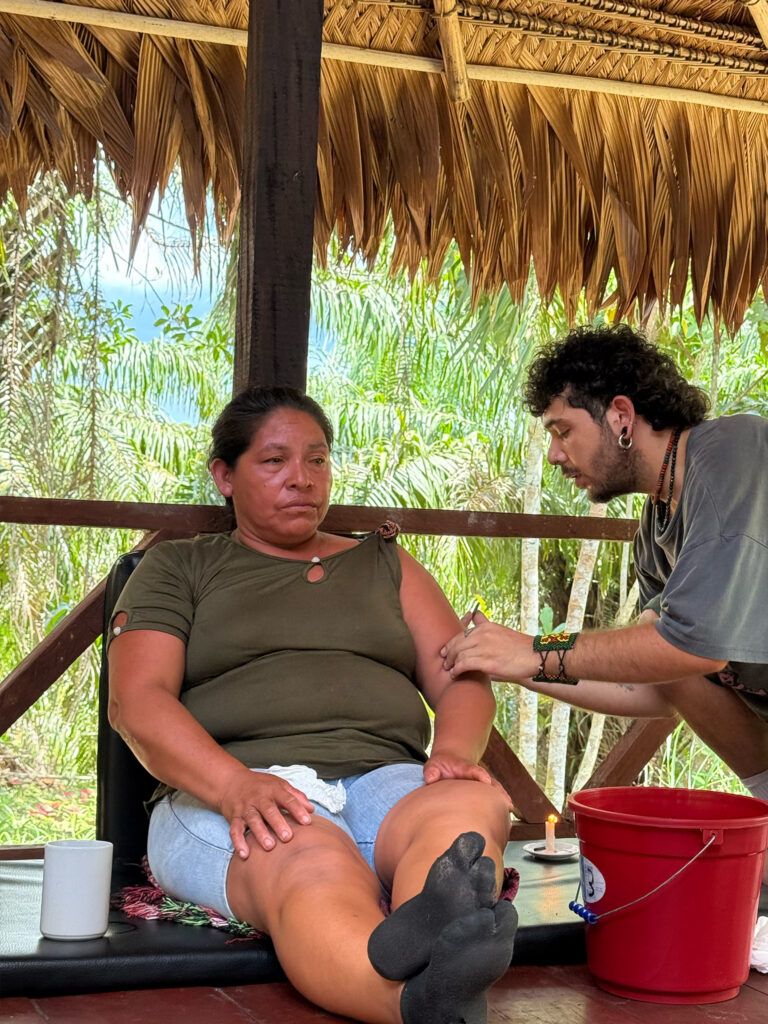
I don’t believe Kambo has become a universal cure that the ancients somehow missed. If it truly healed every condition reliably, tribal shamans, who lived intimately with these medicines, would likely have centered it that way. Instead, they used it selectively within a broader system.
We do hear powerful stories. People report relief from chronic pain, fatigue, inflammation, depression, or autoimmune issues after sessions. Some conditions seem to respond more consistently than others. But we also see the opposite. Individuals with the same diagnosis, receiving the same treatment, sometimes get very minimal results or nothing at all.
Healing is deeply individual. No two bodies, minds, or life contexts are identical. Genetics, mindset, diet, stress levels, emotional history, even subtle energetic factors, all play roles. Allopathic medicine often leans on statistics and symptom suppression. A headache pill works for most because it targets a common pathway. Kambo operates differently. It’s loaded with bioactive peptides like dermorphin, an opioid analgesic, phyllocaerulein, sauvagine, and others that trigger widespread reactions: immune modulation, vasodilation, purging, heightened awareness.
Yet the effects aren’t predictable or uniform. Some people feel pain relief or clarity immediately. Others get headaches afterward, or benefits emerge slowly over days. For a few, nothing noticeable shifts.
We don’t fully understand the mechanisms. Scientific studies are limited, mostly on isolated peptides in animals or in vitro, with few comprehensive human trials. The peptides clearly provoke strong physiological responses. They may stimulate the body’s adaptive self-regulating mechanisms, which could explain why the results are so diverse. But how this translates to lasting healing depends on far more than biology alone. Placebo, ritual, intention, and the body’s unique state all interact.
Our modern medical system is more advanced than ever, yet it still can’t explain or cure everything. Traditional systems, from Ayurveda to Chinese medicine to Amazonian practices, continue delivering results through entirely different lenses. What resonates deeply for one person may fall flat for another. There is no universal medicine or therapy.
So should we abandon Kambo?
Not at all. In my experience serving and receiving it over the years, I’ve witnessed remarkable improvements in a wide range of challenges, physical vitality, emotional release, mental sharpness. Many others share similar stories. At the same time, I’ve seen sessions where the desired outcome didn’t arrive. Was it timing? A need for more sessions or a different approach? Something unresolved in the person’s system? The alignment of the stars? I don’t pretend to know every reason, and I’m wary of practitioners who invent explanations just to sound authoritative.
What I do know is this. Kambo is worth exploring for those drawn to it, as long as it is done responsibly. Approach it practically but reverently, as a ritual that works beyond the purely physical.
As practitioners, our role isn’t to oversell or promise cures. That is misleading and erodes trust. Instead, we support people in approaching it with realistic expectations. It may bring profound benefits, it may require patience, repetition and life changes, or it may not be the right fit. That is why promoting Kambo as a cure for specific diseases can be misleading. A more honest approach is to share personal experiences about people who have benefited from it without labeling it as the cure for that particular problem.